
Welcome to ICSEEGT 2025
We are pleased to invite you to the Fifth International Conference on Sustainable Energy, Environment, and Green Technologies (ICSEEGT 2025), jointly organized by the Department of Mechanical & Civil Engineering, Poornima College of Engineering, Jaipur, India, in hybrid mode. Building on the success of its four previous editions, ICSEEGT has established itself as a dynamic forum for the exchange of innovative ideas and research in the fields of renewable energy, environmental engineering, and green technologies. The conference aims to bring together leading academics, researchers, and industry professionals to discuss sustainable solutions to global environmental challenges. ICSEEGT 2025 offers an excellent platform for knowledge sharing, networking, and collaboration, with selected papers to be published in Scopus/SCIE-indexed journals and proceedings. The event will feature keynote talks, technical sessions, and interactive forums that highlight the latest developments in sustainability. We also invite you to explore Jaipur, the culturally rich Pink City of India, known for its heritage sites, vibrant bazaars, and warm hospitality. Join us for an inspiring academic experience and an unforgettable visit to Jaipur.
About the Conference
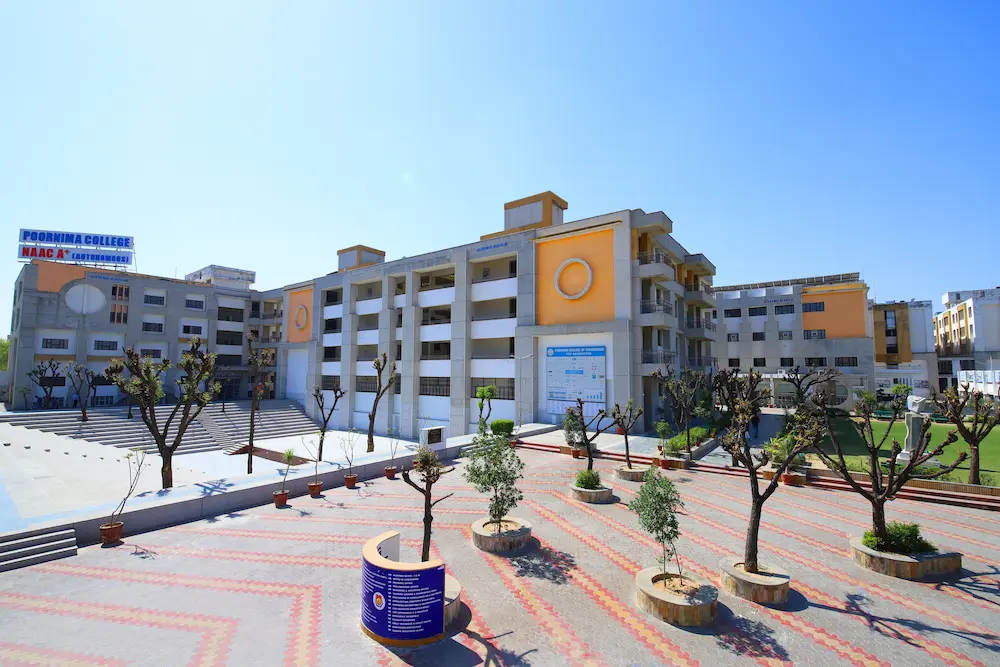
The Fifth International Conference on Sustainable Energy, Environment, and Green Technologies (ICSEEGT 2025) will be held at Poornima College of Engineering, Jaipur, India. Jointly organized by the Department of Mechanical & Civil Engineering, Poornima College of Engineering, in hybrid mode, this prestigious event serves as a global platform for researchers, academicians, industry professionals, and policymakers to exchange knowledge, share cutting-edge research, and promote collaborative innovation.
ICSEEGT 2025 is committed to addressing the most pressing global challenges by uniting multidisciplinary efforts focused on sustainability, environmental stewardship, and green technology advancement. The conference aims to:
- Foster knowledge dissemination and the presentation of transformative research in energy, environment, and sustainable technologies.
- Promote dialogue among academia, industry, and government for practical and policy-level solutions.
- Encourage innovation and cross-disciplinary collaboration to tackle climate change, environmental degradation, and resource inefficiency.
- Provide a platform for capacity building and engagement in sustainability-related policy and planning.
- Strengthen international cooperation and visibility in green growth and sustainable development domains.
The conference is organized around four key interdisciplinary themes, selected for their relevance to current global needs and sustainable development goals:
- Renewable and Clean Energy Systems
- Environmental, Pollution, and Systems Engineering
- Green Technologies and Sustainability
- Sustainable and Functional Energy Materials
The scope of ICSEEGT 2025 is intentionally broad to encourage integrative approaches and multi-stakeholder participation aimed at fostering a sustainable and resilient future for all.
About Us
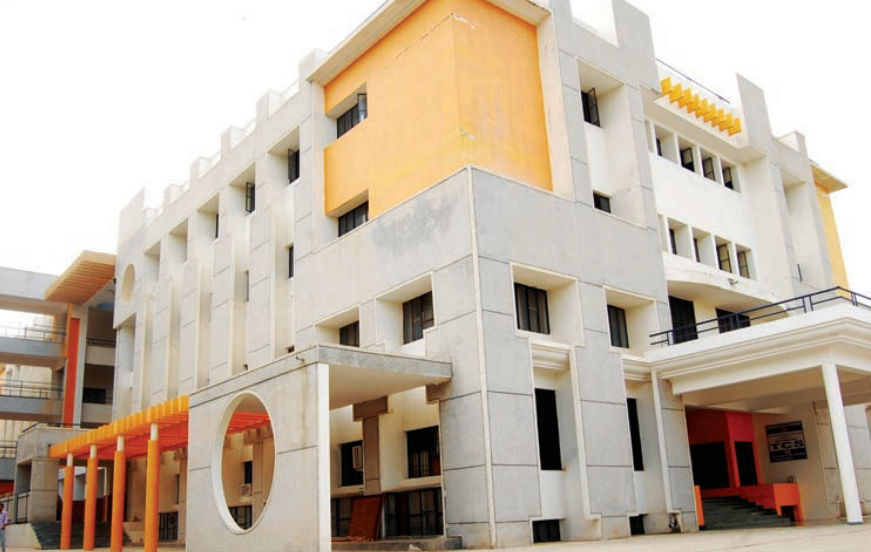
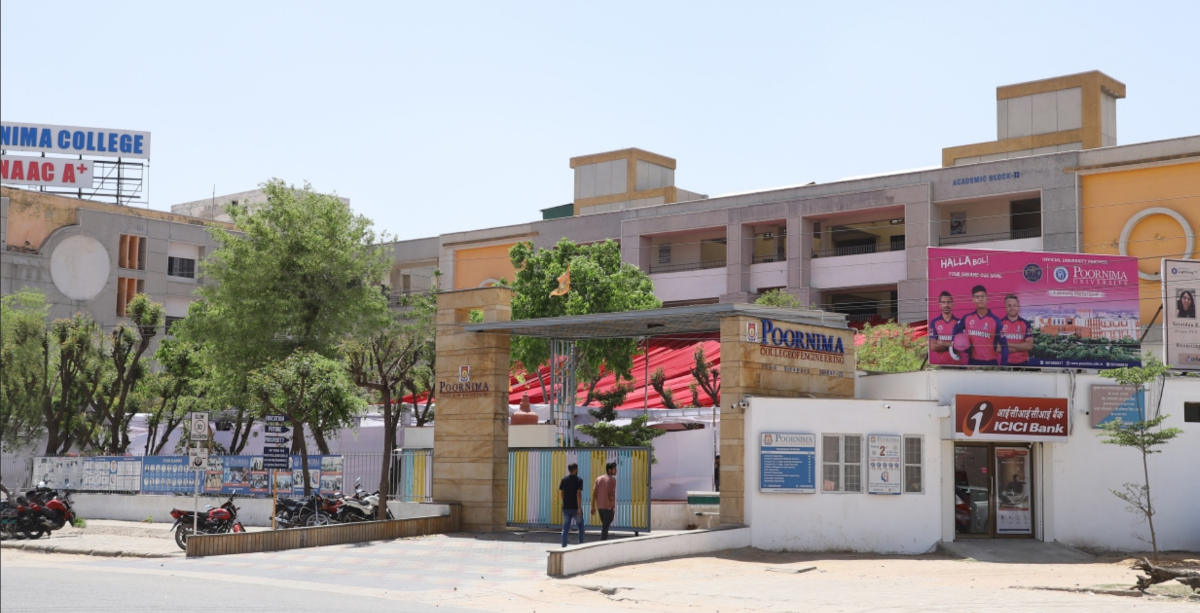
Poornima College of Engineering was established in 2000 with the aim of imparting pragmatic technical education. In its magnificent journey of 25 years, PCE has set various benchmarks and reached at new pinnacles in Engineering Education with dedication, perseverance and devotion. PCE is celebrated its “Silver Jubilee Year” (2024-25) by implementing the academic autonomy conferred by UGC. With student strength of 2500+ students studying in 10 specializations of engineering (CE, AI & DS, CSE (AI), CSE (Cyber Security), CE (R), ECE, EE, ME, Civil & IT), with more than 3.5 Lac square feet of built up area, highly qualified faculties, state of the art infrastructure, good placements and industry-led curriculum, PCE is spearheading its outstanding voyage with motto ‘Success is not a destination, it’s a journey’. Poornima College of Engineering, Jaipur, has been ranked second under the QIV Ranking of Rajasthan Technical University, Kota, since 2017. The QIV Ranking is based primarily on Academics, University results, Placements, and alumni. PCE has implemented outcome-based education systems and processes to strategically monitor the progress of every individual student right from admission to exit. There are beyond the curriculum contents and activities planned yearly to bridge the gap between industry and academia. This has been demonstrated through continuous enhancement in placement numbers and packages. Moreover, PCE has been accredited by the National Assessment and Accreditation Council (NAAC) with an esteemed A+ Grade, validating the commitment to quality education for the next five years, and Autonomous status by UGC for the next 10 years. The institute has also received a diamond rating from the QS I-gauge.
Poornima College of Engineering (PCE), Jaipur, an autonomous institution accredited with NAAC A+ Grade, is recognized for academic excellence and industry-aligned education. Established in 2004, the Department of Mechanical Engineering is one of PCE’s leading departments, known for its innovation-driven curriculum and focus on experiential learning. The department blends core technical knowledge with hands-on learning through project-based modules, design challenges, and Add-on Courses in CAD/CAM, 3D Printing, Robotics, and Industrial Automation. The curriculum is regularly updated with inputs from industry experts, alumni, and academia to meet evolving global standards.
Modern laboratories and simulation tools support advanced research, prototyping, and practical learning. Faculty and students actively collaborate with national and international organizations, contributing to a global academic perspective. The department maintains a strong industry-academia interface through regular workshops, seminars, industrial visits, and conferences. Expert lectures from IITs, foreign universities, and industry leaders keep students informed about emerging technologies and career trends. Innovation and leadership are fostered through platforms like TECHNOVATION, SAE student chapters, and multidisciplinary projects in the IDEA Lab. A culture of openness and collaboration ensures a student-centric learning environment. The department is committed to producing technically proficient, ethically responsible, and industry-ready mechanical engineers.
The Civil Engineering Department of PCE came into existence in the year 2011 with an alignment of the department’s evolution with key events and technological advances for the betterment of the society and nation. At present, it has the intake of 60 students providing all the amenities of infrastructure related to knowledge, research, experiments and training of multiple professions. Civil Engineering is a timeless and ever-relevant discipline within the engineering profession. To ensure excellence in education, the Department of Civil Engineering comprises faculty members with academic backgrounds from prestigious institutions, dedicated to imparting their knowledge and expertise. It has been taking initiatives for the versatile enhancement of the students through the technical, cultural and sports fests since its inception. The department has started a Center of Excellence (CoE) for GEOINFORMATICS and a Center of Excellence for Sustainable Construction Materials (UltraTech). Additionally, ICI student chapter has recently been inaugurated.

Jaipur, the capital and largest city of the Indian state of Rajasthan, is located in Northern India. It was founded on November 18, 1727, by Maharaja Sawai Jai Singh II, the ruler of Amer, after whom the city is named. As per the 2011 Census, Jaipur had a population of approximately 3.1 million, making it one of the ten most populous cities in India at the time. Often referred to as the "Pink City" due to the dominant terracotta pink color of its buildings—especially in the old walled city—Jaipur lies about 268 km (167 miles) from New Delhi, the national capital. It forms a key part of India’s Golden Triangle tourist circuit, along with Delhi and Agra, and is one of the most visited tourist destinations in the country.
Jaipur is home to two UNESCO World Heritage Sites: the Jantar Mantar, an astronomical observatory, and the Amer Fort, a majestic fort located on the city’s outskirts. In the 2008 Condé Nast Traveller Readers’ Choice Awards, Jaipur was ranked the 7th best place to visit in Asia. Key attractions include the iconic Hawa Mahal, Jal Mahal, City Palace, Nahargarh Fort, Jaigarh Fort, Birla Mandir, Galtaji Temple, Govind Dev Ji Temple, Garh Ganesh Temple, Moti Dungri Ganesh Temple, Royal Gaitor Cenotaphs, Sanghiji Jain Temple, and the Jaipur Zoo. Beautiful gardens like Sisodia Rani Bagh and Kanak Vrindavan, along with the grand Raj Mandir Cinema, enhance the city’s charm.
Planned meticulously by Bengali architect Vidyadhar Bhattacharya under the principles of Vastushastra (traditional Hindu architecture), Jaipur features a grid-based city layout divided into six sectors with 34-meter-wide roads, a rarity among pre-modern Indian cities. Besides its architectural splendor, Jaipur is also a vibrant cultural hub. It is renowned for blue pottery, an intricate and colorful craft unique to the city, as well as its lively puppet shows, folk dances like Ghoomar and Kalbeliya, and traditional Rajasthani music. The city’s culinary heritage is equally rich, offering delicacies like Dal Baati Churma, Laal Maas, Gatte ki Sabzi, and sweets such as Ghewar and Mawa Kachori. Altogether, Jaipur stands as a perfect blend of history, culture, craftsmanship, and cuisine, making it a must-visit destination in India.